The meaning
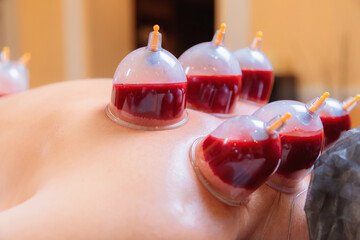
الحجامة (al-hijama) comes from an Arabic root related to suction. In practice, a cup is placed on the skin and the air inside is removed, either with a hand pump or with a brief flame. The skin rises slightly into the cup and blood moves to the surface.
In wet cupping, which is what most people mean by hijama, the practitioner then makes several very shallow cuts with a sterile blade and places the cup again. This second suction draws out a small amount of blood. In dry cupping there are no cuts at all.
| Wet cupping (hijama) | Dry cupping | |
|---|---|---|
| Skin cuts | Yes, shallow and superficial | No |
| Blood drawn | A small amount | None |
| Marks | Round marks and fine lines, fading in days | Round marks that fade in 3 to 10 days |
| Sunnah link | The method described in the hadith | A gentler alternative |
Hijama in the hadith
Hijama is one of the few medical practices the Prophet Muhammad ﷺ both used and praised. These are the narrations people cite most.
الشِّفَاءُ فِي ثَلاَثَةٍ: شَرْطَةِ مِحْجَمٍ، أَوْ شَرْبَةِ عَسَلٍ، أَوْ كَيَّةٍ بِنَارٍ، وَأَنْهَى أُمَّتِي عَنِ الْكَيِّ
“Healing is in three things: a cupper’s incision, a drink of honey, and cauterization by fire. But I forbid my Ummah from cauterization.”
Sahih al-Bukhari 5680
مُرْ أُمَّتَكَ بِالْحِجَامَةِ
On the night of the Isra, every group of angels the Prophet ﷺ passed told him: “Order your Ummah to practise cupping.”
Jami’ at-Tirmidhi 2053 and Sunan Ibn Majah 3477, narrated by Ibn Mas’ud. Scholars have graded it hasan.
مَنِ احْتَجَمَ لِسَبْعَ عَشْرَةَ وَتِسْعَ عَشْرَةَ وَإِحْدَى وَعِشْرِينَ كَانَ شِفَاءً مِنْ كُلِّ دَاءٍ
“Whoever has himself cupped on the 17th, 19th and 21st will find it a cure for every illness.”
Sunan Abi Dawud 3861, narrated by Abu Hurayrah. Graded hasan by a number of scholars.
The Prophet ﷺ also had himself cupped and paid the cupper for his work (Sahih al-Bukhari 2278), which is why the practice is considered Sunnah and not only permissible.
A note on grading. Hadith scholars differ on the strength of some narrations. If you want to cite these, check the references with a qualified scholar or a trusted hadith database.
Days and places on the body
The narration above names the 17th, 19th and 21st of the Islamic lunar month. Many practitioners book those days first, so it is worth asking early. Traditional points include the area between the shoulders (al-kahil), the two sides of the neck (al-akhda’ayn) and the crown of the head, all mentioned in the books of Sunnah. Points on the back are also common for muscle tension.
A short history
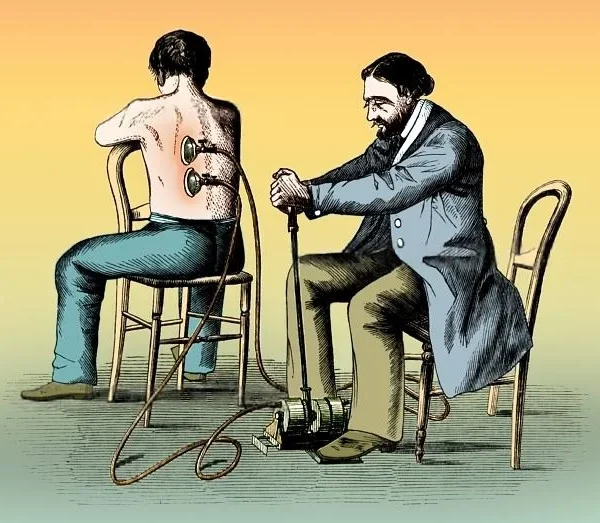
Cupping is thousands of years old. It appears in ancient Egyptian medical writing and in Greek and Chinese medicine. Physicians in the Islamic world, including Ibn Sina in The Canon of Medicine, wrote about it in detail.
What the research says
Modern studies on cupping are mixed and many are small. Some show short-term relief from neck and back pain, while reviewers point out the need for larger, better-designed trials. For that reason we describe hijama as a complementary, Sunnah-based practice and not as a cure. It never replaces the advice of your doctor.